
Clothing Repair Services
Explore the range of clothing repair services I offer. Find what’s best for you and then submit your request for approval.
Each repair is unique, so pricing varies depending on the size of the damage, fabric type, and repair technique used. My goal is to provide you with a service that prevents any further damage in the future. I use the highest level of thought, expertise, and care when repairing your garments. Every piece is hand or machine sewn solely by me, so every project takes time. All of these elements are taken into account in my pricing. Please take the time to read through the descriptions before submitting your repair, as it is very helpful for me. Thank you!
Repair Menu
-
Darning (denim):
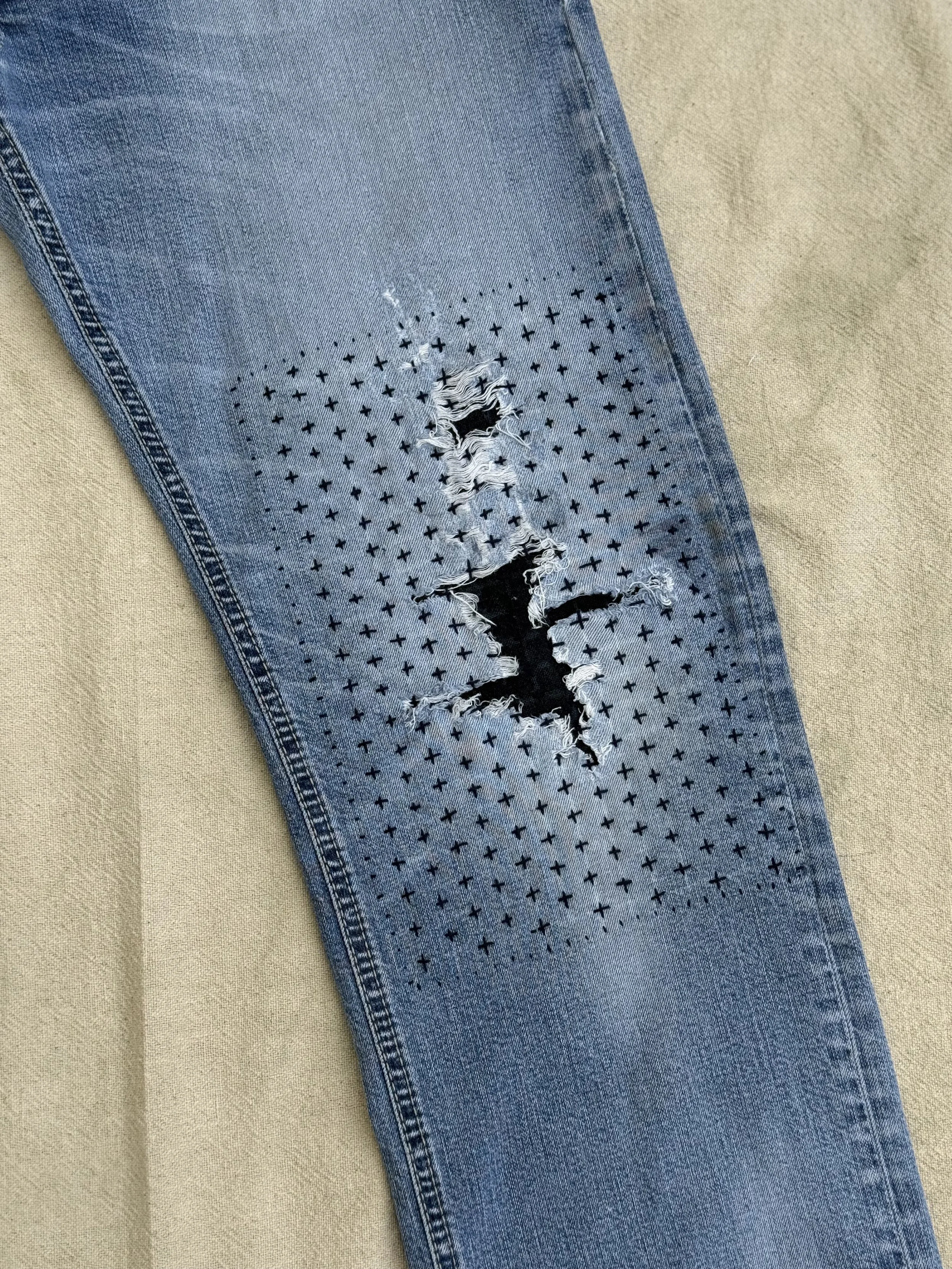
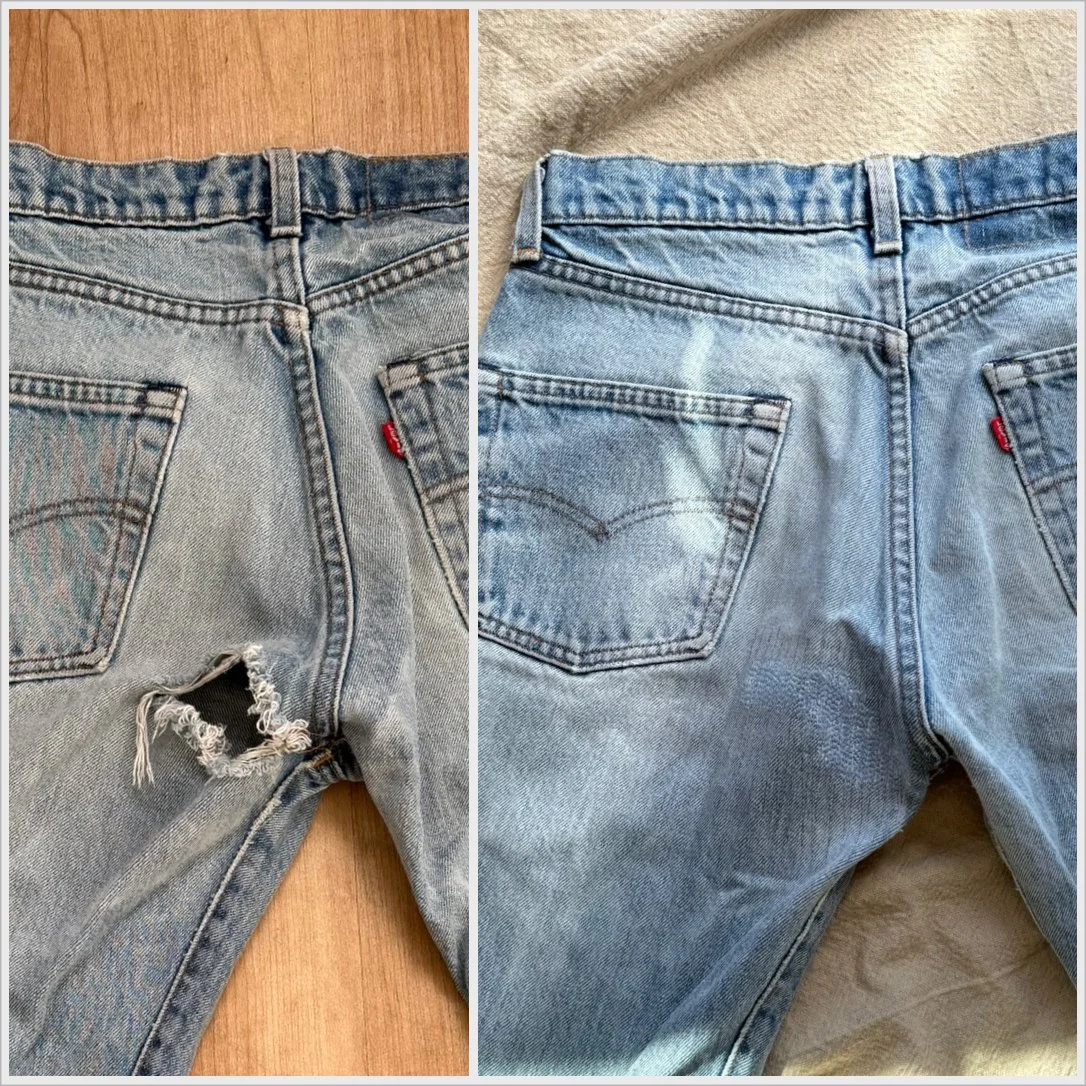
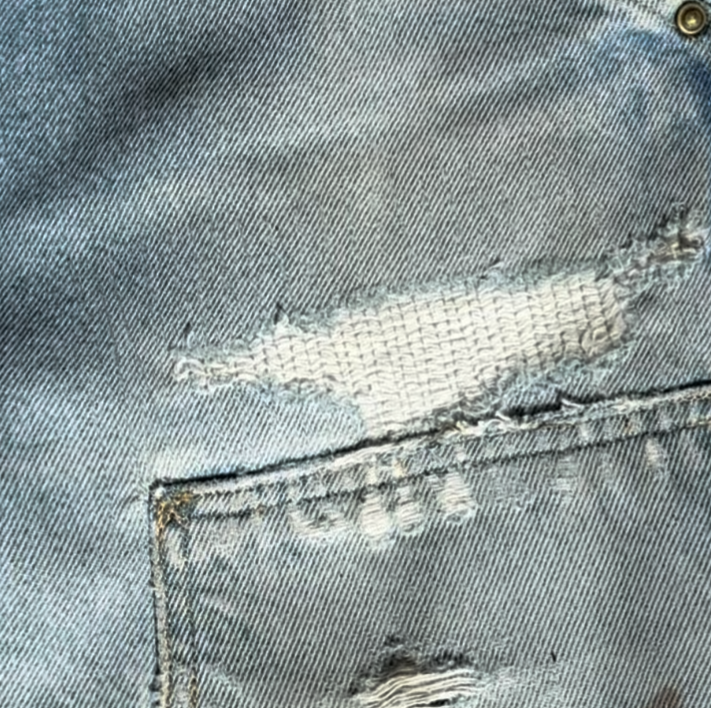
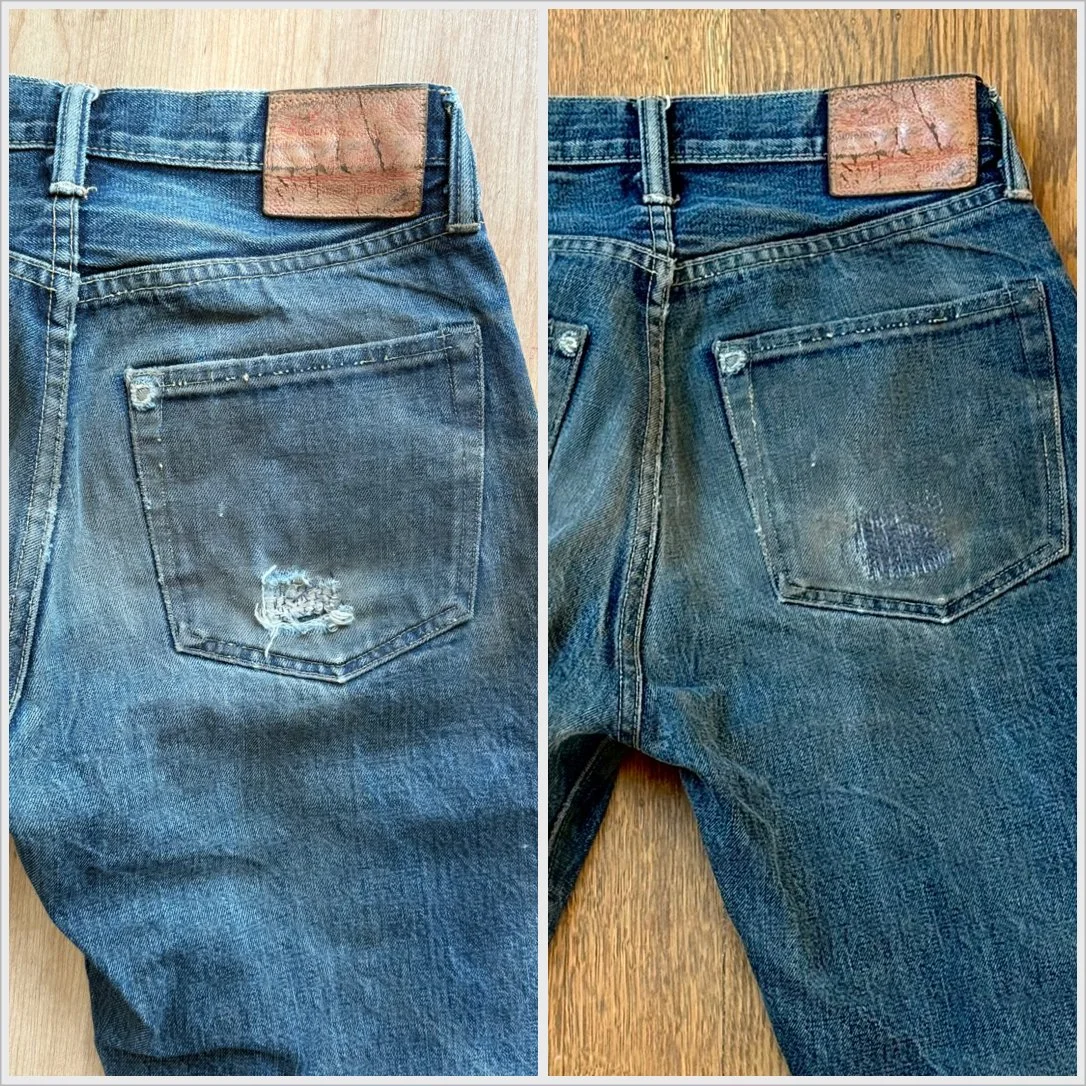
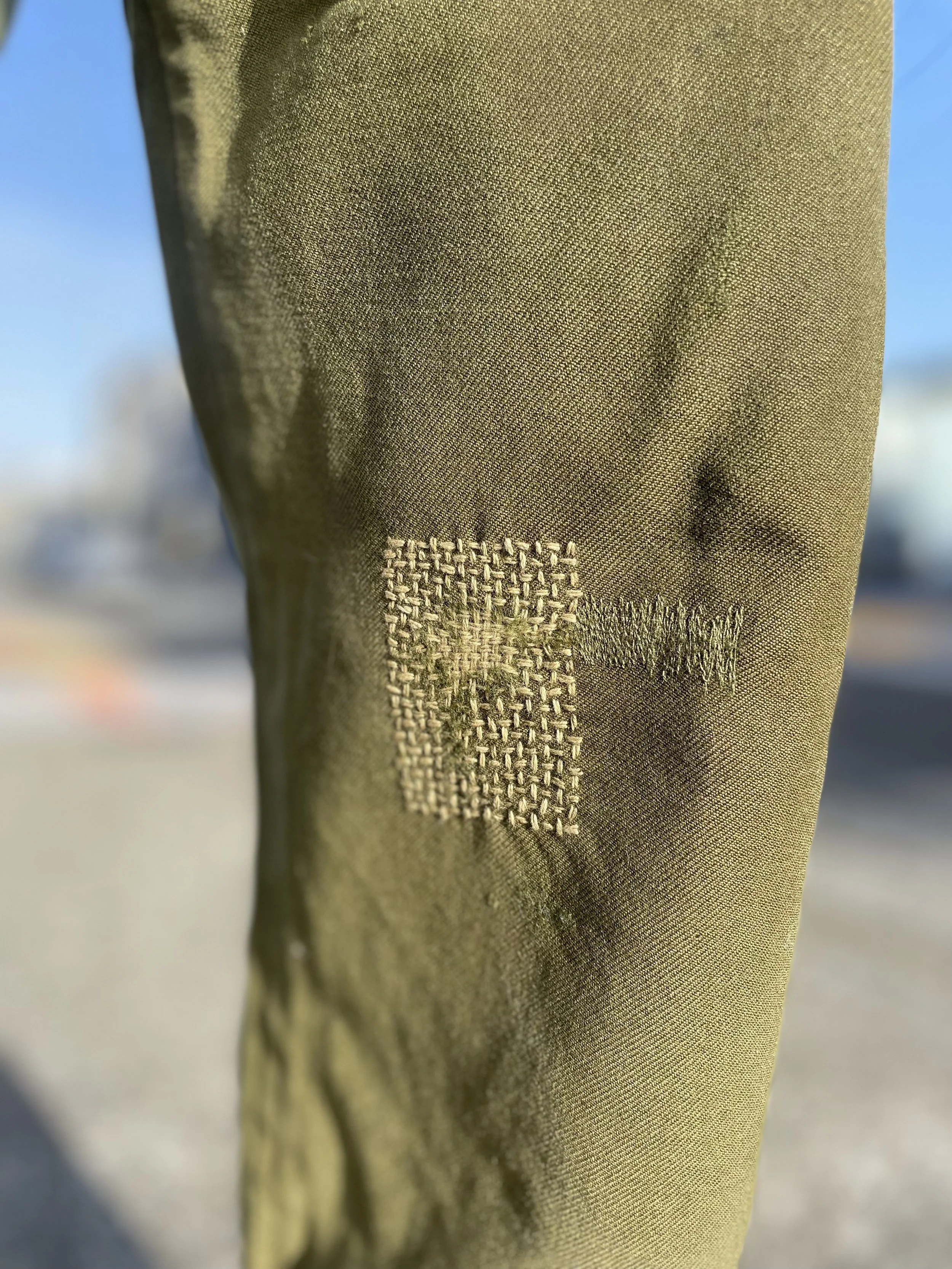
Denim darning is a repair technique used to reinforce worn or damaged areas of jeans by rebuilding the fabric with dense stitching. This is done using machine darning, where thread is layered back and forth across the damaged area to recreate the strength of the original fabric and prevent the hole from spreading. I usually open up the seam, backpatch with a lightweight cotton fusible, stitch that down, fill in any missing weft thread, and then darn over holes. I can either do this in a way that hides the original damage or in a way that still shows the original wear, but still reinforces it with stitching + backpatch.
Hole/threadbare Repair (Machine darning)
Size 3”x3”: $45
Size 5x3: $70
Size 11x7 (entire thigh & knee reinforcement, just one side): $80
-
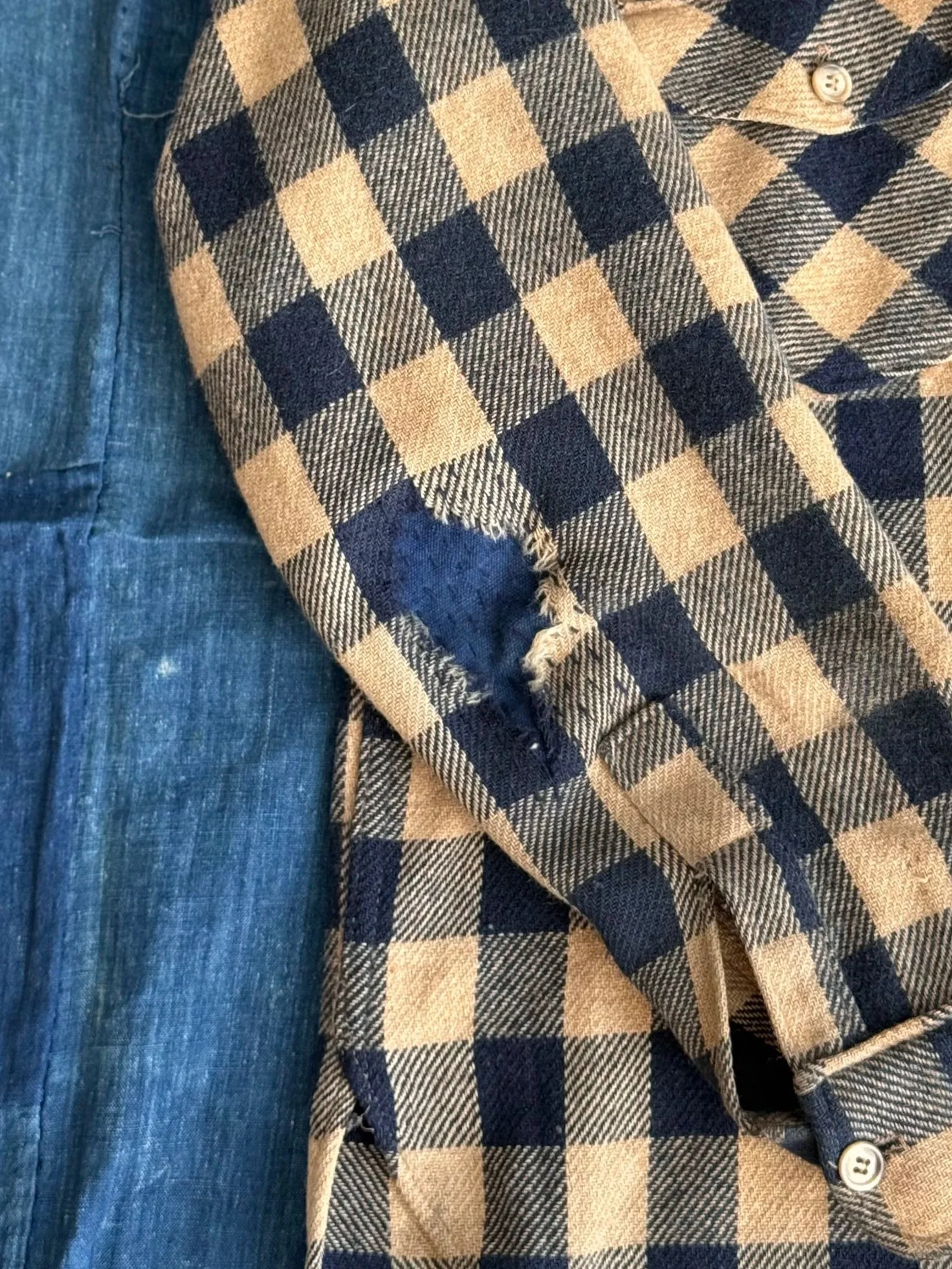
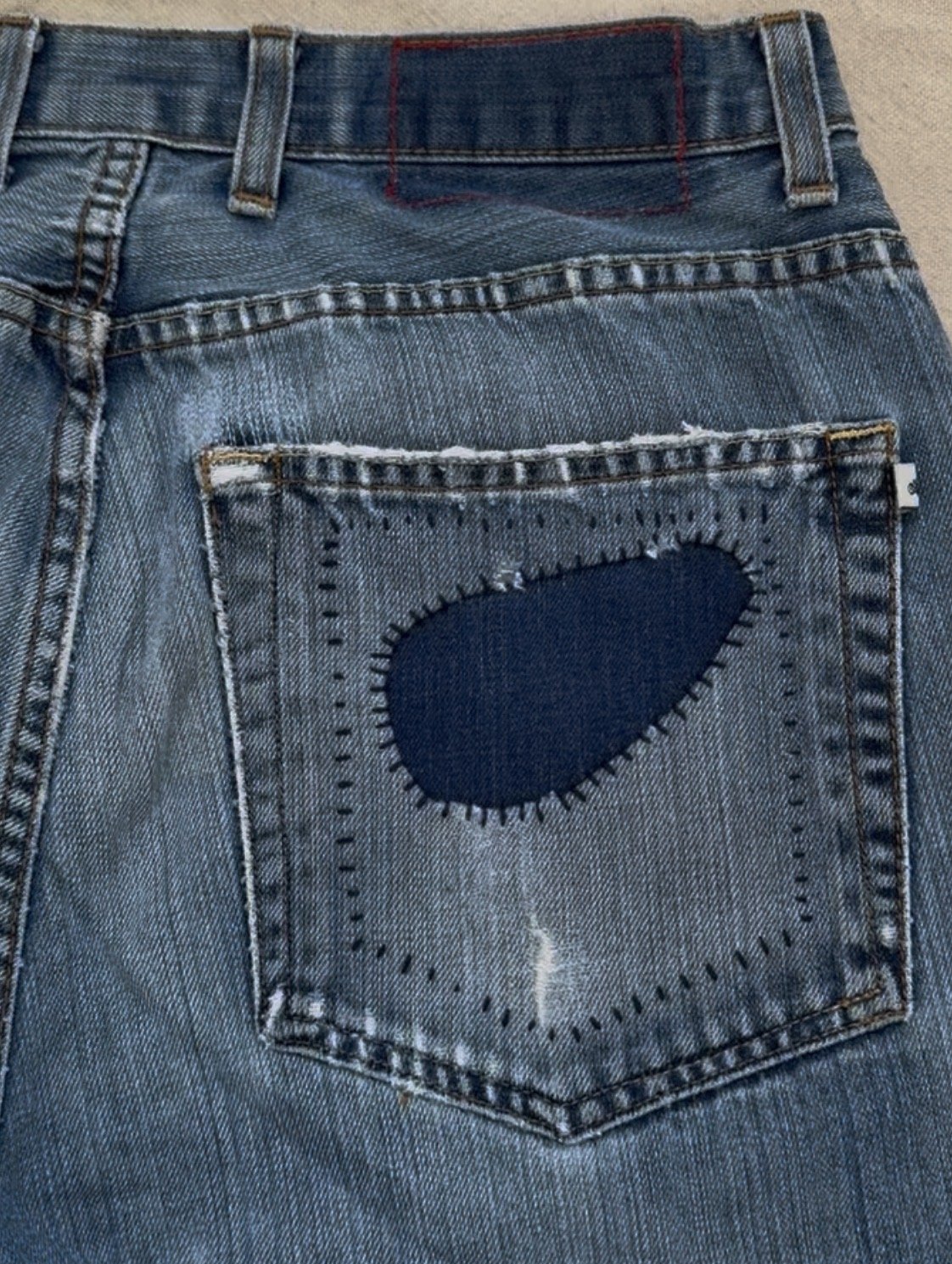
Patch repair involves reinforcing a damaged area by attaching a piece of fabric in front or behind a hole/worn area. The patch stabilizes the surrounding material and restores durability, allowing the garment to continue being worn. Patches can be applied in a way that blends in with the original fabric or intentionally highlighted as part of the repair.
Inner or outer patch 3x3: $45
Inner or outer patch 5x3: $70
-
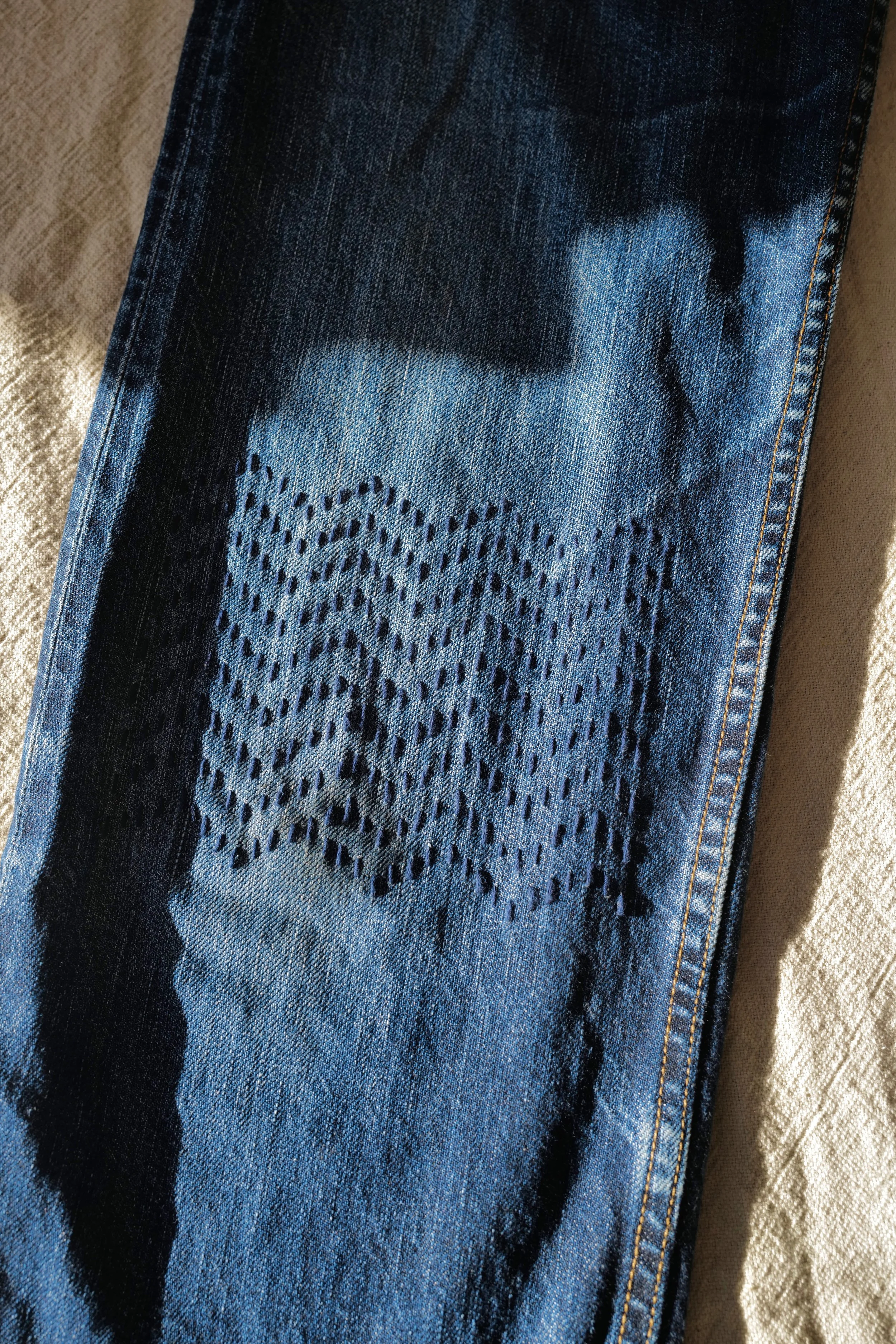
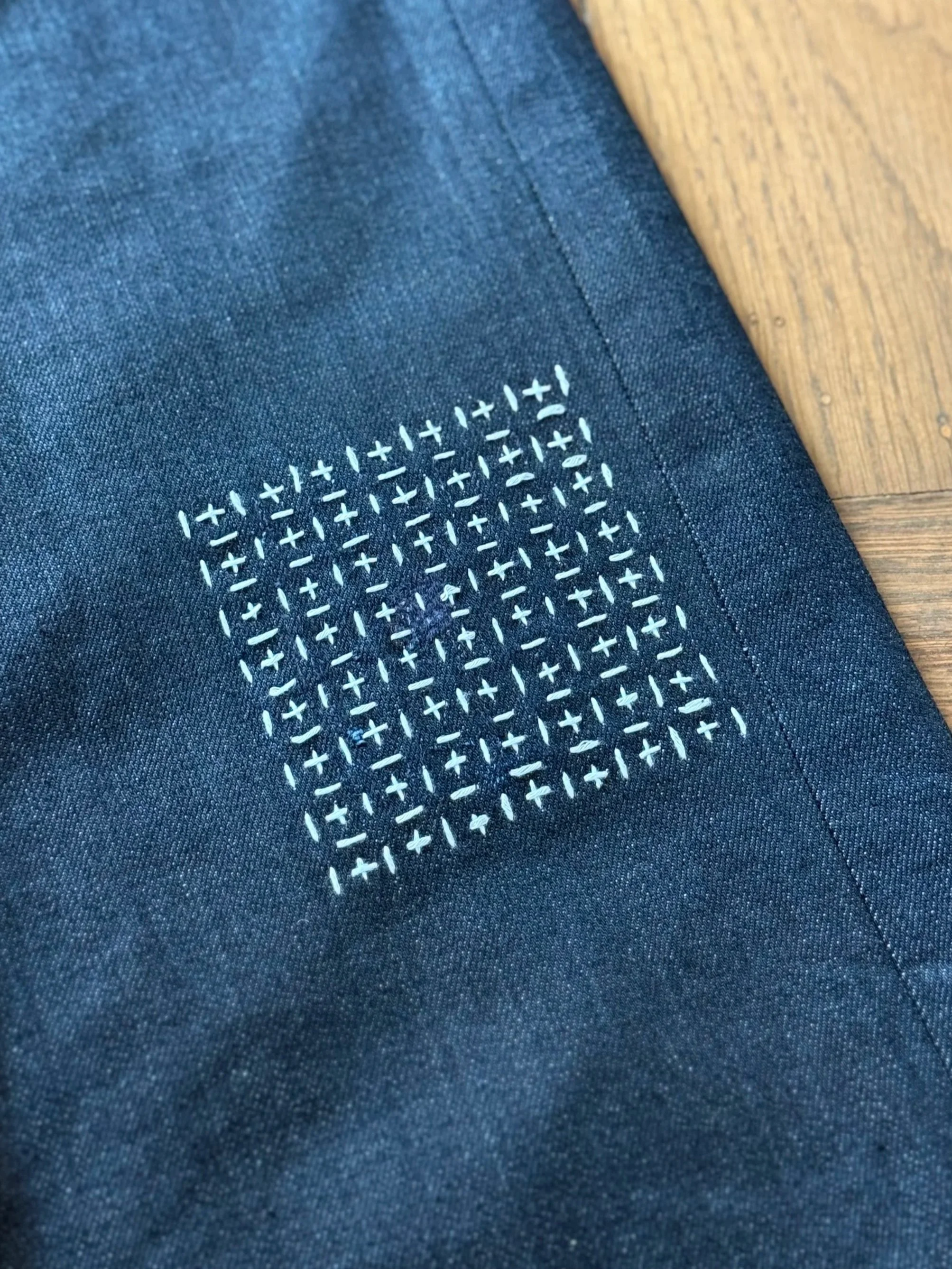
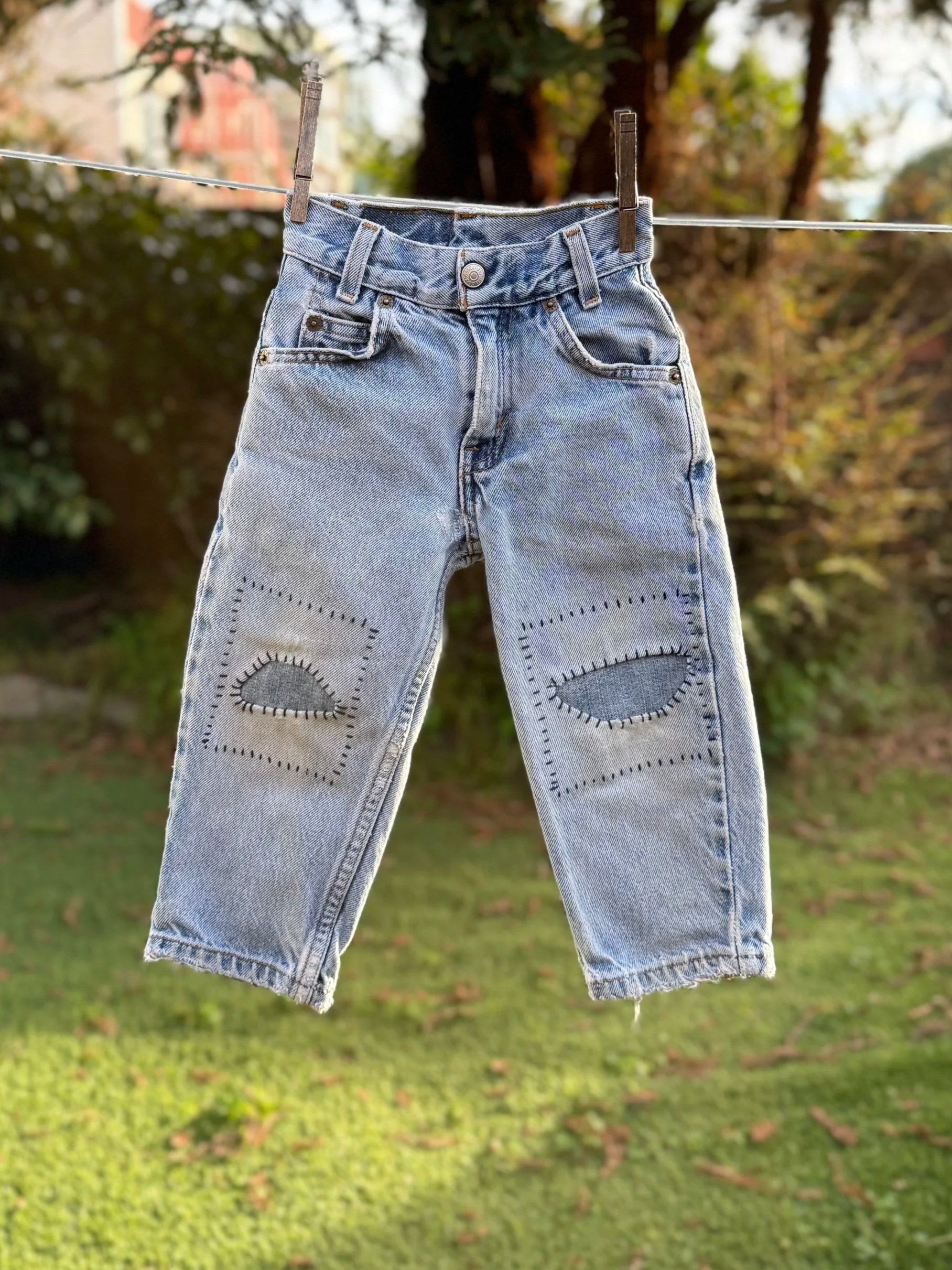
Sashiko is a traditional Japanese stitching technique that originated as a way to reinforce and repair clothing through repeated hand-sewn stitches. Historically used by working communities to strengthen and extend the life of textiles, sashiko combines practicality with beautiful geometric patterns. Today it is often used in visible mending, allowing repairs to both stabilize worn fabric and celebrate the garment’s continued life. I offer a version of this in my practice. This is usually added on top of a backpatch that I will need to stitch into place (unless it’s just an embellishment).
Small patch (around 3x3”): $60-$75
Medium patch (5x3”): $80-90
Large sashiko repair (11x7): $120+
-
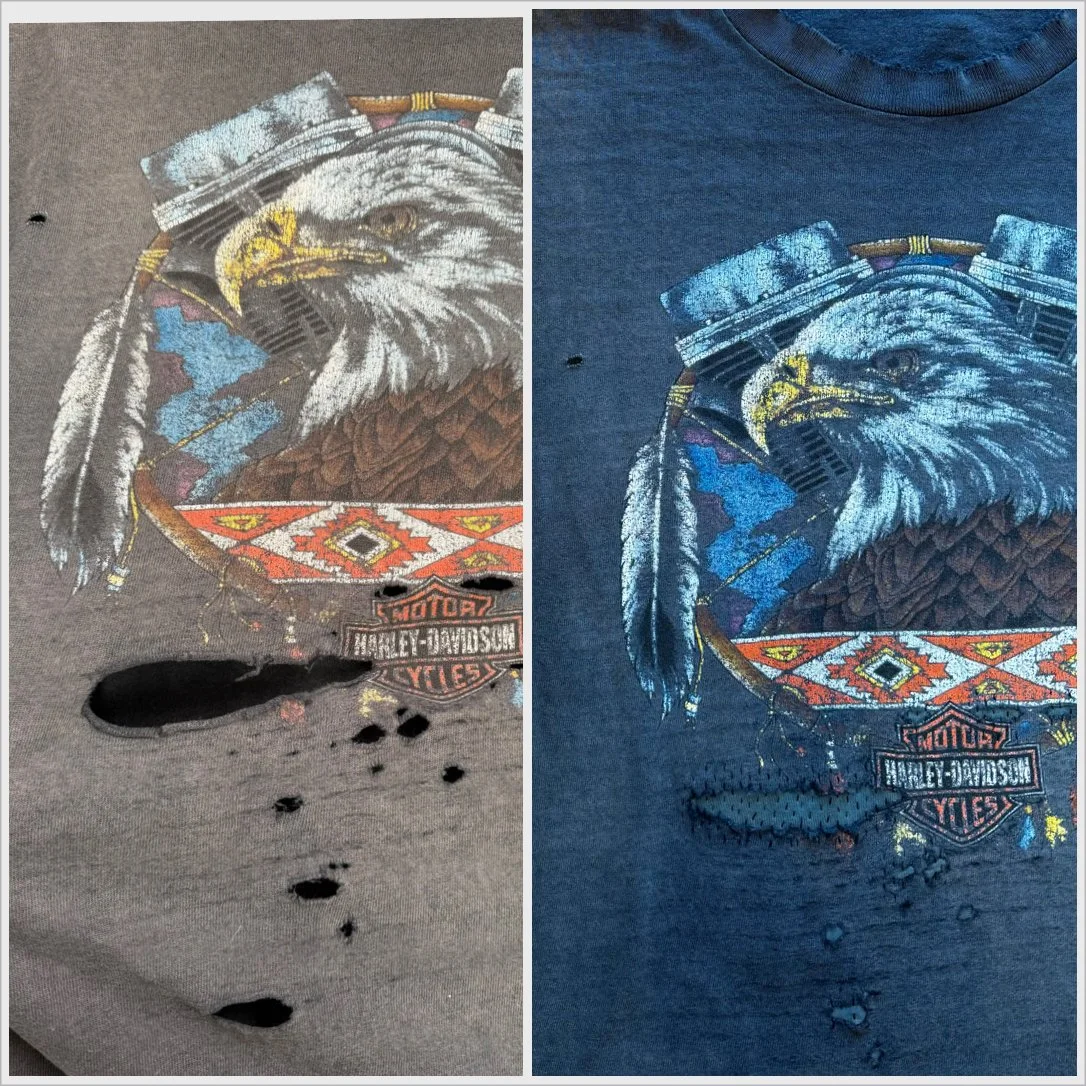
This is a technique used to repair holes in knit fabrics by weaving thread into the damaged area to recreate the fabric structure. This can be done in a way that tonally blends into the fabric or stands out as a sort of visible mending technique. This is all done by hand.
Hole size 1x1: $40
Hole size 3x3: $70
-
Original Hem
The original hem keeps the garment’s existing finished edge intact. Instead of cutting it off, the fabric is shortened from above the hem and the original edge is reattached. This is a great choice for vintage jeans, because it preserves the worn-in look, fading, and stitching that make the hem look awesome. (Please note, I do not have a chainstitch machine)Standard Hem
A standard hem shortens the garment by cutting off the excess fabric and creating a new hem from scratch. The edge is folded and sewn cleanly, resulting in a crisp, uniform finish. This is the most common method and works well for most fabrics. Great for pants that don’t have any fading or are new.Standard hem: $45
Original hem: $55
Original hem with hem repair: $70
Gallery
-
![]()
Sashiko Pattern
-
![]()
Sashiko Pattern
-
![]()
Sashiko Pattern
-
![]()
Denim Darn (full darn)
-
![]()
Denim Darn (with wear shown)
-
![]()
Pocket Darn
-
![]()
Patch with sashiko
-
![]()
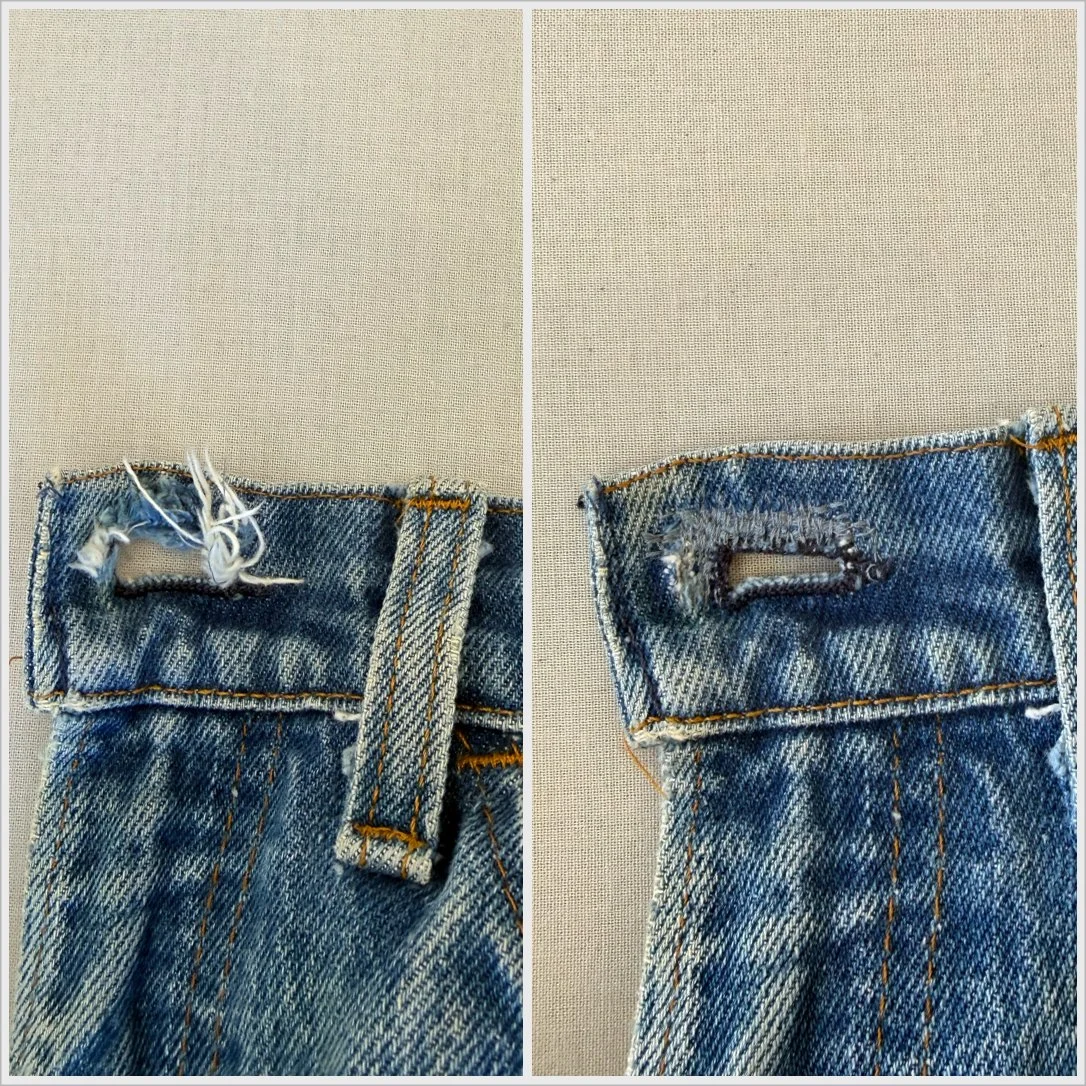
Button Hole Repair
-
![]()
T-Shirt Repair
-
![]()
Inner Patch
-
![]()
Inner Pocket Patch
-
![]()
Hand Darn
The Process
Plan with Purpose
Read through all of the repair descriptions and photos provided and choose the option you think is best for you.
Submit repair request
Fill out the “repair questionnaire.” I will review and respond to with approval and pricing estimate.
Ship your garments or deliver locally
Either ship your pieces direct to me or deliver to me locally in San Francisco.
Pay and receive
Once I have finished your project, I will then ask for payment via Venmo, Paypal, or cash (if in person). I will ship your pieces back to you once I receive payment.